
Getting behind the wheel in the Australian Capital Territory requires more than just knowing how to drive. You need to understand the licensing system, meet specific eligibility requirements, and work through a graduated process that progressively builds your skills.
Whether you’re a first-time learner eager to hit the road or an overseas license holder relocating to Canberra, this guide walks you through every stage of obtaining your ACT driver’s license. From booking your pre-learner license course to upgrading to a full license, you’ll find the concrete steps, timeframes, and requirements you need to know.
Overview: ACT Driver Licence Stages and Key Requirements
An ACT driver licence is required to drive any motor vehicle on public roads in the Australian Capital Territory. The licensing framework operates under the Road Transport (Driver Licensing) Act 1999 and the Road Transport (Driver Licensing) Regulation 2000, which set out the rules, conditions, and pathways for all licence holders.
For car (Class C) licences, the ACT uses a graduated licensing scheme with three main stages:
Learner licence (L plates) – Your starting point, where you learn to drive under supervision
Provisional licence (P plates) – A transitional stage split into P1 (red plates) and P2 (green plates)
Full licence – Unrestricted driving privileges after completing the provisional period
You must usually progress from your learner’s license to P plates, then hold a provisional license for a total of 3 years before becoming eligible for a full ACT driver’s license. This staged approach ensures you gain sufficient driving experience before earning unrestricted road access.
Some rules differ based on your circumstances:
Drivers aged 25 or older have reduced supervised driving hours requirements
Interstate licence holders can often transfer directly to an equivalent ACT licence
Overseas drivers from recognised countries may skip certain assessments
The sections below break down each stage in detail, so you can see exactly what’s required at every step of your licensing journey.
Minimum Age and Eligibility to Start Driving in the ACT
You can start the licensing process in the ACT at age 15 years and 9 months. This is when you become eligible to enroll in the mandatory pre-learner license course and begin working toward your Ls.
Here are the minimum age requirements for each licence stage:
15 years and 9 months – Eligible to complete the pre-learner course and sit the Road Rules Knowledge Test
15 years and 9 months – Eligible to obtain an ACT learner driver licence after passing the knowledge test
17 years – Minimum age to hold a provisional licence
20 years – Earliest possible age for a full licence (after completing 3 years on Ps, starting at 17)
To hold an ACT licence you must be an ACT resident or be treated as one under the regulations. When you apply, you’ll need to provide proof of identity and residency. Acceptable documents include a photographic Australian driver’s licence (current or expired within 2 years), an Australian birth certificate (not commemorative versions), or ACT vehicle registration papers for residency verification.
Medical fitness to drive is also required. If you have any long-term or permanent medical condition that could affect your ability to drive safely, you must disclose this to Access Canberra. This obligation applies at every licence stage, from learner through to full licence.
How to Get Your ACT Learner Licence
Getting your Ls is the first step on your driving journey. The process typically involves completing a mandatory pre-learner license course followed by passing the ACT Road Rules Knowledge Test. Once you’ve done both, you can visit an Access Canberra service center to collect your learner license.
Completing the Pre-Learner License Course
The pre-learner license course (often called Road Ready or similar names) covers essential knowledge you’ll need as a new driver:
Safe driving skills and vehicle control basics
Hazard awareness and risk perception
How the ACT Graduated Licensing Scheme works
Road rules specific to the Australian Capital Territory
Most ACT high schools offer this course free to students. If you’re a private candidate or missed the school program, you can complete the course through accredited training providers for a fee.
Successful completion gives you eligibility to sit the ACT Road Rules Knowledge Test. Your course provider will issue knowledge test certificates confirming your completion.
Booking and Sitting the Knowledge Test
You book and sit the ACT Road Rules (Driver) Knowledge Test through the designated ACT testing website. Some Access Canberra locations also offer walk-in testing options.
Key points about booking:
Some course packages include 2 free test attempts
If you fail, you must rebook and pay the applicable test fee
Check the current 2025–26 fee schedule on the ACT government website for exact costs
Documents Required at Access Canberra
To obtain your ACT learner licence, visit Access Canberra with:
Proof of identity (passport, birth certificate, or current Australian licence)
Proof of ACT residency (utility bill, lease agreement, or vehicle registration)
Course completion certificate from your pre-learner course
Knowledge test result showing you passed
Payment for the learner licence fee
An ACT learner licence is usually issued for up to 5 years. However, you must comply with all L plate conditions whenever you drive during this period.
Road Rules Knowledge Test – Format and Tips
The ACT Road Rules Knowledge Test is a multiple-choice, computer-based exam that assesses your understanding of local road rules, traffic signs, and safe driving practices. You’ll complete the test at designated testing terminals, and results are provided immediately.
Test structure:
Approximately 35–40 multiple-choice questions
Questions drawn from the ACT Road Rules Handbook
Timed session (typically around 45 minutes)
Minimum pass mark applies (usually around 80%)
Preparation tips:
Read the ACT Road Rules Handbook thoroughly
Use official online practice tests to familiarise yourself with the format
Pay special attention to the rules on mobile phone use while driving
Study speed limits near schools and in construction zones
Know the alcohol limits for learner drivers (zero BAC)
If English is not your first language or you have a learning difficulty, contact Access Canberra before booking to ask about available support options such as extended time or interpreter services.
Driving on Your Ls: Conditions and Supervised Driving Hours
Once you have your ACT learner’s license, you must follow strict conditions and complete supervised driving hours before progressing to your P’s. This stage is designed to help you build practical driving experience in a controlled environment.
Core learner conditions:
Always display yellow L plates on the front and rear of the vehicle
Drive only with a supervising driver in the front passenger seat who holds a full Australian licence (held for at least 2 years) and has a BAC below 0.05%
Never exceed posted speed limits
Maintain zero blood alcohol concentration (BAC) at all times
Zero tolerance for illegal drugs while driving
No towing trailers with a gross vehicle mass over 750kg
Logbook requirements by age:
Age Group | Total Supervised Hours | Night Hours Required | Minimum Learner Period |
|---|---|---|---|
Under 25 | 100 hours | 10 hours | 12 months |
25 or older | 50 hours | 5 hours | 6 months |
All supervised hours must be recorded in the official ACT learner driver logbook (in paper or an approved digital format). Each entry requires details of the date, time, driving conditions, and the supervising driver’s signature.
You must hold your ACT learner licence for the minimum continuous period shown above before you can attempt the practical driving assessment or upgrade to a provisional licence.
Lesson Credits and Structured Logbook Programs (CBT&A)
ACT learners can fast-track their logbook hours through lessons with an ACT-accredited driving instructor and competency-based training and assessment (CBT&A) programs.
The triple-time credit rule:
Your first 10 one-hour lessons with an accredited instructor can count as 3 hours each in your logbook. This means:
10 professional lessons = up to 30 hours of logbook credit
Remaining hours must still be completed with a supervising driver
Credits only apply to lessons with ACT-accredited instructors
How CBT&A programs work:
You complete a series of documented driving competencies with your instructor
Progress is tracked across multiple lessons rather than a single test
Your instructor signs you off when you’re driving at the provisional standard
Completing an approved CBT&A logbook may allow you to skip the one-off government practical test
When choosing an instructor, compare lesson packages (such as 10-lesson or 30-hour bundles) and select someone experienced with the ACT Graduated Licensing Scheme. The investment in professional lessons can reduce your overall time to licensure and build stronger skills.
The Hazard Perception Test (HPT) in the ACT
The online hazard perception test is a scenario-based assessment that measures how you recognise and respond to road hazards. Passing this test is mandatory before you can move from your Ls to your Ps.
When you can sit the HPT:
After holding your learner licence for at least 3 months
This applies whether you’re under 25 or 25 years and older
What to expect during the test:
You view short video clips filmed from a driver’s perspective
Scenarios show real traffic situations with developing hazards
You respond by clicking or tapping when you identify a hazard or when it’s safe to take action
The test measures your reaction timing and accuracy
Fees and rebooking:
Attempt | Cost | Waiting Period if Failed |
|---|---|---|
First attempt | Free for ACT learners | 24 hours |
Subsequent attempts | Fee applies (check current schedule) | 24 hours |
Preparation advice:
Practice using sample HPT clips on official ACT or road safety websites
Focus on scanning intersections, pedestrian crossings, and merging traffic
Watch for cyclists, motorcyclists, and vehicles emerging from driveways
Develop the habit of looking well ahead while driving
The HPT pass rate sits around 70–80% on first attempts based on driving school feedback, so adequate preparation significantly improves your chances.
From Ls to Ps: Getting Your ACT Provisional Licence
Your provisional licence represents the next stage after completing your learner period, logbook hours, and hazard perception test. You must be at least 17 years old to hold a provisional licence in the ACT.
Prerequisites for your ACT provisional licence:
Hold a valid ACT learner licence for the required minimum period (12 months for under-25s, 6 months for 25+)
Complete the required supervised driving hours with signed logbook entries
Pass the Hazard Perception Test
Two pathways to your Ps:
CBT&A pathway – Complete a competency-based training and assessment logbook with an accredited instructor who signs you off on all required competencies
Government test pathway – Book and pass the one-off practical driving assessment (PDA) with Access Canberra
If your ACT learner driver license was issued or renewed after 1 January 2020, you’re covered by the ACT Graduated Licensing Scheme (GLS), which mandates these staged requirements.
Choosing Between CBT&A Logbook and One-Off Government Driving Test
Learners can either be assessed gradually through CBT&A with a driving school or sit a single government-run test at an Access Canberra centre. Each approach has distinct advantages.
Government one-off test:
Aspect | Details |
|---|---|
Duration | Approximately 30–45 minutes |
Assessment areas | Vehicle control, road rule knowledge, gap selection, hazard response |
Pros | Fewer paid lessons are needed if you have strong existing skills |
Cons | Waiting periods for bookings; full fee required if you fail and rebook |
CBT&A assessment:
Aspect | Details |
|---|---|
Duration | Spread across multiple lessons |
Assessment areas | 22 documented driving proficiencies |
Pros | Ongoing feedback and coaching; instructor signs off when ready; often reduces test-day nerves |
Cons | Requires ongoing lesson costs; must use accredited instructors |
You can switch between pathways if needed. For example, you might start with CBT&A but later decide to book a government test if you prefer a single assessment event.
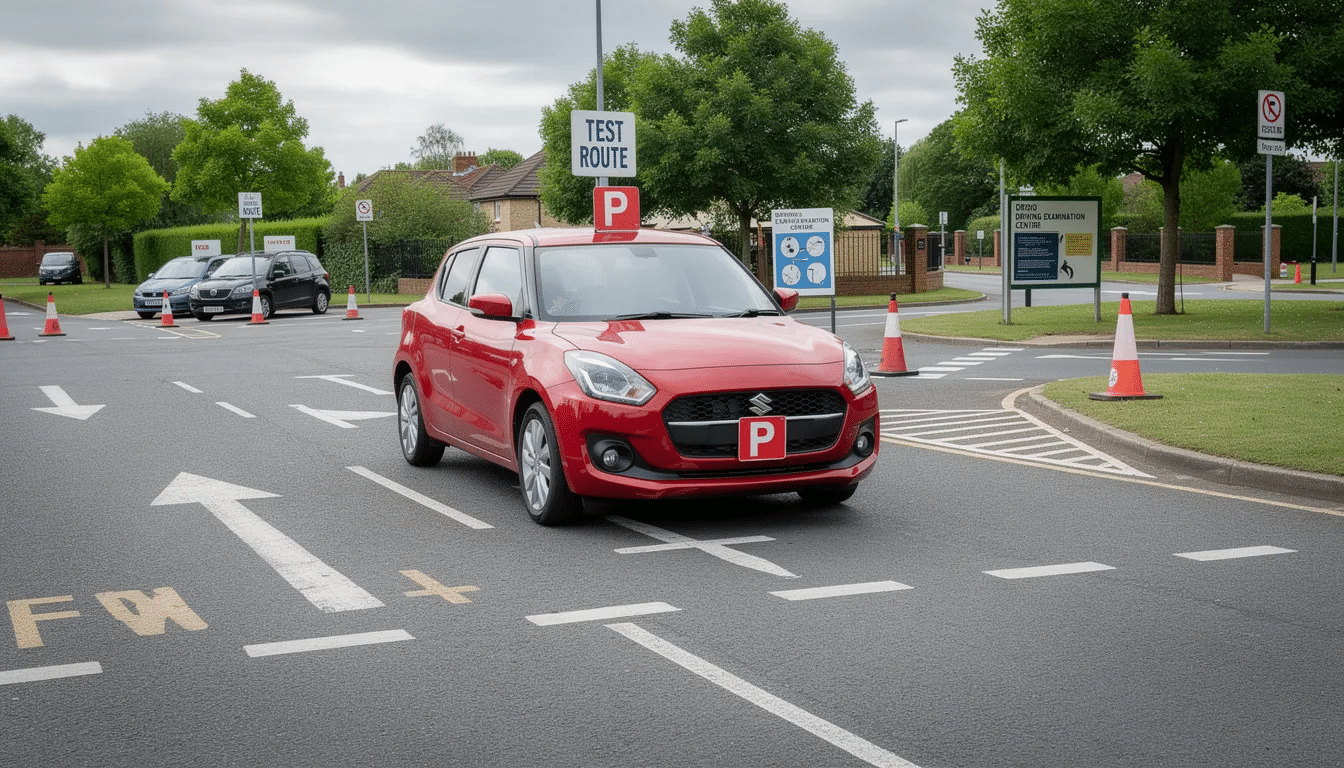
Booking and Taking Your Practical Driving Assessment
Once your prerequisites are complete, you can book your practical driving assessment through your driving school (for CBT&A final sign-off) or directly with Access Canberra for the government test.
Booking options:
Online through the Access Canberra website
By phone
In person at an Access Canberra Service Centre
Overseas and some interstate licence holders may need to book in person
What to bring on test day:
Your current learner licence
Completed logbook or instructor competency certificate
Hazard perception test result (if not already recorded in the system)
A suitable, roadworthy vehicle with current ACT or interstate registration
The vehicle must have working seatbelts, indicators, and mirrors
Important timing notes:
Arrive at least 15 minutes before your scheduled time
Arriving more than 15 minutes late, and your assessment may be canceled
Late cancellations inside the permitted window can incur fees and require rebooking
Assessment outcomes:
Result | Next Steps |
|---|---|
Pass (under 25) | Receive P1 licence (red plates) |
Pass (25 or older) | May receive P2 licence (green plates) directly |
Fail | Receive feedback on areas to improve; wait at least 48 hours before rebooking |
Visiting Access Canberra to Issue Your Ps and Full ACT Licence
Access Canberra manages all licence issuing in the Australian Capital Territory. You’ll typically finalize your provisional or full license upgrade in person at a service center, though some renewals can be completed online.
Issuing your provisional licence:
After you pass your assessment or CBT&A, visit the Access Canberra Service Center with:
Your completed logbook or competency certificate
Proof of identity documents
Hazard perception test result
Payment for the provisional licence fee
Physical card delivery:
Access Canberra no longer issues plastic cards over the counter. Instead:
You receive a temporary paper licence valid for driving
Your physical card is posted to your nominated address
Allow up to 21 business days for delivery
Provisional licence classes by age:
Age at Issue | Licence Type | Plate Colour |
|---|---|---|
Under 25 | P1 | Red |
25 or older | P2 | Green |
An ACT provisional licence must normally be held for 3 years total before you can upgrade to a full ACT driver licence. This period breaks down as:
P1 stage: 12 months minimum
P2 stage: 24 months minimum
After the Provisional Period: Upgrading to a Full ACT Driver Licence
Once you’ve held your provisional licence for a full 3-year period with no disqualifications, you become eligible for a full, unrestricted ACT driver licence.
How the upgrade works:
Access Canberra usually sends a renewal notice close to your P licence expiry
The notice invites you to upgrade online or at a Service Centre
Some licence holders may need to complete an eye test (especially at ages 50, 60, 65, 70, or 75+)
Upgrade steps:
Confirm your personal details are current
Pay the full licence fee
Choose your licence duration (1, 3, 5, or up to 10 years as allowed under current policy)
Receive a temporary paper licence while your card is mailed
What changes with a full licence:
Restriction | Provisional | Full Licence |
|---|---|---|
Display plates | Required | Not required |
BAC limit | Zero | 0.05% (general limit) |
Demerit point threshold | 4 points (P1) | 12 points |
Speed limit cap | Posted limits apply | Posted limits apply |
A full ACT driver’s licence removes provisional-specific restrictions, but all regular road rules still apply. You remain subject to speed limits, mobile phone laws, and other traffic regulations.
Interstate and Overseas Licence Holders in the ACT
If you move to Canberra with an interstate or overseas licence, you may need to transfer it to an ACT driver licence within a set timeframe. The process varies depending on where your licence was issued.
Interstate licence holders:
Can generally transfer directly to an equivalent ACT licence
Visit Access Canberra with proof of identity and ACT residency
Complete the transfer forms and pay the applicable fee
No practical test required if your licence is current and valid
Overseas licence holders from recognised countries:
May transfer without a practical driving assessment
Must provide your overseas licence (with certified translation if not in English)
May need an International Driving Permit as supporting documentation
Complete identity and residency verification
Overseas licence holders from non-recognised countries:
Must complete the full licensing process including:
Pre learner licence course
Road Rules Knowledge Test
Hazard perception test (after 3 months on Ls)
Practical driving assessment
Special provisions for experienced overseas drivers:
First-time overseas applicants who are already experienced drivers may be exempt from the Hazard Perception Test for their initial assessment. However, if they fail the practical test, they’re then required to hold an ACT learner licence for at least 3 months and complete the HPT before retesting.
Always confirm current recognition lists, required documents, and time limits directly with Access Canberra before driving on your overseas licence. Requirements can change, and you want to ensure you’re driving legally.
Conditions and Restrictions for Provisional Drivers
P1 and P2 licence holders in the ACT drive under additional restrictions designed to improve road safety for new drivers. Understanding these rules helps you avoid common mistakes that lead to suspensions.
P-plate conditions checklist:
✅ Display red P plates (P1) or green P plates (P2) on front and rear of vehicle
✅ Maintain zero BAC at all times
✅ Comply with any passenger restrictions (especially for young P1 drivers)
✅ Adhere to night driving restrictions where applicable
✅ Stay within demerit point caps (4 points for P1, 8 for P2)
✅ Never exceed posted speed limits (100 km/h maximum, even if higher limits are signed)
Serious offenses with immediate consequences:
Offence | Potential Consequence |
|---|---|
High-range speeding | Immediate suspension |
Drink driving (any BAC) | Immediate suspension |
Mobile phone use while driving | Demerit points and fines |
Accumulating excess demerit points | Suspension and possible provisional period reset |
Provisional drivers must keep their contact and address details up to date with Access Canberra. This ensures you receive any renewal notice or enforcement correspondence. Failing to update your address could mean missing critical deadlines.
Medical Conditions, Fitness to Drive, and ACT Licence Obligations
All ACT licence holders, including learners and provisional drivers, have a legal duty to notify Access Canberra of any long-term or permanent medical condition that could affect safe driving. This obligation exists to protect you and other road users.
Conditions that must be reported include:
Epilepsy or seizure disorders
Diabetes requiring insulin
Serious vision impairment not fully corrected by glasses or contact lenses
Heart disease affecting consciousness or physical capability
Significant mental health conditions
Any condition causing sudden loss of consciousness
Neurological conditions affecting motor control
What happens after you report:
Access Canberra may request medical reports from your doctor
An eye test may be required
In some cases, a practical driving assessment confirms your fitness to drive
Your licence may be issued with conditions (coded endorsements such as “S” for corrective lenses)
Why disclosure matters:
Failure to disclose a relevant medical condition can lead to:
Fines and penalties
Cancellation of your licence
Potential insurance issues if you’re involved in a crash
Criminal liability in serious cases
The process is designed to be supportive rather than punitive. Many people with medical conditions can still drive safely with appropriate management and licence conditions. Being honest with Access Canberra protects your licence status and keeps everyone safer on ACT roads.
Frequently Asked Questions About ACT Drivers Licences
These FAQs address common questions about ACT licences that aren’t fully covered in the sections above. If you can’t find your answer here, visit Access Canberra online or contact them directly.
How much does it cost to get an ACT driver’s license?
Costs vary depending on your pathway and whether you use professional lessons. As a general guide for 2025–26:
Pre learner licence course: Often free through schools, or approximately $50–$100 privately
Knowledge test: First attempts may be free with course packages; rebooking attracts a fee
Learner licence issue: Approximately $40–$60
Hazard perception test: First attempt free; subsequent attempts around $30–$40
Provisional licence issue: Approximately $70–$120 depending on duration
Professional lessons: $60–$100 per hour with an accredited instructor
Always check the latest fee schedule on the ACT government website, as amounts are renewed annually.
How long does it take to get my P plates?
Most new drivers under 25 will spend at least 12 months on their Ls, plus the time needed to complete 100 driving hours, pass the HPT, and complete the practical assessment. For drivers 25 and older, the minimum learner period is 6 months with 50 required hours. In practice, the complete process from starting the pre learner course to receiving your provisional licence typically takes 12–18 months for younger drivers.
Can I drive in other states on my ACT licence?
Yes. ACT learner and provisional licences are recognised across Australia under mutual recognition arrangements. However, you must comply with both your ACT licence conditions and any local restrictions in the state you’re visiting. For example, if NSW has stricter P-plater rules for certain situations, you must follow those rules while driving in NSW.
What happens if my licence is suspended?
Suspensions can significantly delay your progress to the next licence stage. If your learner or provisional licence is suspended:
The suspension period doesn’t count toward your minimum holding time
You may need to re-sit tests or assessments before having your licence restored
Serious offences may require you to start the provisional period again
Your demerit point balance may reset or carry additional restrictions
Avoid suspension by complying with all conditions, especially zero-BAC requirements and demerit-point limits. One serious mistake can add months or years to your licensing journey.